 Skip to content



A heat pump that cooled the house all summer can meet the first freezing night with lukewarm registers, a coil crusted in ice, or a power bill that quietly climbs week after week. None of that announces itself until the cold arrives, and by then the easy fixes are harder to reach.
A pre-winter tune-up puts extra attention on heating-specific functions such as defrost and backup heat, while also checking year-round components under heating conditions. It also covers refrigerant performance, airflow, the filter, and thermostat operation. The length of the visit depends on the system and what the technician finds, and many manufacturers recommend professional heat-pump service twice a year, typically in spring and fall.
What Should a Pre-Winter Heat Pump Service Check?

A thorough pre-winter heat pump tune-up should cover the entire system, with particular attention to components that operate mainly in heating mode. A spring cooling check may not reveal problems with the defrost controls or auxiliary heat because these features may see little use during warmer months. Inspecting them before winter helps identify issues before colder weather puts the system under greater demand.
Defrost Cycle and Sensor Testing
The defrost cycle removes frost that accumulates on the outdoor coil during heating. A technician should check the defrost control board and coil temperature sensor to confirm the system initiates and completes defrost cycles correctly. Faulty controls can allow excessive ice buildup or trigger unnecessary cycles that interfere with efficient heating.
Reversing Valve Operation
The reversing valve directs refrigerant flow to switch the heat pump between heating and cooling modes. During a pre-winter inspection, a technician should verify that the valve changes modes correctly and check for signs of malfunction. A valve that sticks or fails to switch properly can leave the home without adequate heat.
Refrigerant Charge and Heating Performance
Refrigerant levels affect how effectively a heat pump transfers heat from outdoor air into your home. A technician can evaluate refrigerant performance using the manufacturer’s specifications and appropriate diagnostic measurements. If a leak or incorrect charge is suspected, qualified service is necessary to identify the cause and restore proper operation.
Auxiliary and Emergency Heat Testing
Electric resistance heat provides supplemental warmth when the heat pump cannot meet the heating demand. During a tune-up, the technician should verify that auxiliary heat operates correctly and that the thermostat controls it as intended. If backup heat runs more often than expected, the system may need further diagnosis to prevent unnecessary electricity use.
Airflow, Filters, and Indoor Comfort
Restricted airflow can reduce heating performance and place additional strain on system components. A technician should inspect the air filter, check indoor and outdoor airflow, and look for obstructions that may affect operation. Replacing a dirty filter and addressing airflow restrictions can help the heat pump distribute warm air more consistently throughout the home.
Thermostat Settings and System Controls
The thermostat coordinates heating stages, temperature settings, and auxiliary heat operation. Before winter, a technician should verify that the thermostat communicates correctly with the heat pump and that its settings match the equipment’s requirements. Incorrect configuration or faulty controls can cause unnecessary backup heating, inconsistent temperatures, or poor system performance.
Refrigerant handling and detailed electrical diagnostics require appropriate training and equipment, so these checks should be performed by a qualified HVAC professional. Scheduling pre-winter heat pump maintenance gives you an opportunity to address developing problems before freezing weather arrives. By checking the defrost cycle, reversing valve, backup heat, airflow, and controls, a technician can help prepare your system for reliable heating throughout the colder months.
How the Defrost Cycle Works and Why It Gets Checked First
A heat pump’s defrost cycle removes frost from the outdoor coil so the system can continue heating efficiently. During a Prescott Valley winter, checking this function helps technicians identify problems that could affect heating performance when temperatures drop.
A pre-winter defrost inspection should cover these key areas:
- Frost Formation and Defrost Activation: Moisture freezes on the cold outdoor coil, triggering defrost controls when frost restricts heat transfer.
- Normal Defrost Cycle Operation: The system temporarily reverses refrigerant flow, melting frost while steam or brief indoor cooling may occur.
- Defrost Sensors and Control Testing: Technicians test the control board and coil sensor to identify faulty readings or incomplete defrost cycles.
- Excessive Ice Buildup: Thick ice covering the outdoor coil or fan may indicate defrost failure, airflow restrictions, or drainage problems.
- Normal Defrost Sounds and Temporary Cooling: Brief whooshing sounds, steam, and cooler airflow are usually normal when heating resumes promptly afterward.
Before winter temperatures arrive, make sure your heat pump is ready for the season’s heating demands. Professional heat pump repair in Prescott Valley can address defrost problems, inspect essential components, and identify performance issues. Scheduling a tune-up before colder weather sets in helps catch developing problems early and prepares your system for more dependable winter comfort.
What Does a Sticking Reversing Valve Do to Your Heat?
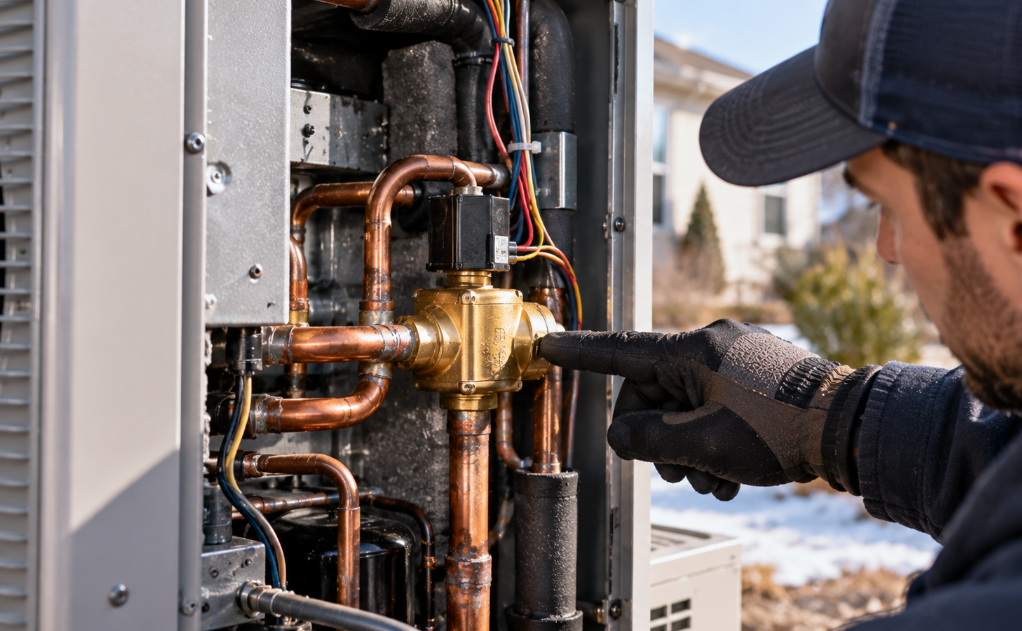
The reversing valve is the component that decides whether your heat pump cools the house or heats it. It reverses the direction refrigerant flows, so the same equipment that pulled heat out in July pushes heat in come January. When it works, you never think about it. When it sticks, the symptom is dramatic.
A valve that sticks or fails to shift can leave the unit stuck in cooling mode while the thermostat calls for heat. The result feels like no heat at all, or worse, air conditioning in winter, and the system may lean hard on backup heat to compensate.
Because valve behavior and defrost logic vary by manufacturer, the fault is diagnosed against the equipment’s own specs, which differ between brands such as Trane and Ruud.
A sticking valve is not a homeowner fix. It involves the sealed refrigerant circuit and often the solenoid that drives the valve, and getting the diagnosis right matters before any part is replaced.
If the registers blow cold while the thermostat is set to heat, a heat pump repair in Prescott Valley is the step that settles whether the valve, the solenoid, or something upstream is at fault.
What the Backup Heat Check Tells You About Your Bill
Auxiliary heat supplements the heat pump when additional capacity is needed or during certain defrost cycles. In an all-electric system, that backup is often electric resistance heat; in a dual-fuel system, it may be a furnace. Emergency heat is a separate thermostat mode that relies on the backup heat source when normal heat-pump operation is unavailable.
Heat pumps can deliver substantially more heating per unit of electricity than electric resistance heat, although efficiency varies with outdoor temperature and equipment performance.
The problem is that backup heat can mask a failing heat pump. If the defrost control or reversing valve is weak, the strips quietly carry the load while the house stays warm, and nothing seems wrong until the bill arrives. Your thermostat is the tell: most display an auxiliary or emergency heat indicator when the strips are running.
| What you notice | What it may mean | Why it matters |
|---|---|---|
| Aux heat shows frequently in mild weather | Controls, staging, or system performance may need checking | Frequent electric backup use can increase operating cost |
| Bill jumps with no cold snap | Backup heat may be running more than expected | Unexpected backup-heat runtime may be one contributor |
| Frequent backup heat | Could involve sizing, controls, low-temperature conditions, or a system problem | Worth professional diagnosis |
If backup heat is running frequently, the heat pump and its controls deserve a closer look. Depending on the cause, the next step may be repair, control adjustment, or, for an aging system that no longer meets the home’s needs, a heat pump installation or replacement in Prescott Valley. Watch the aux indicator: frequent operation can be a useful clue when you describe the problem to a technician.
When Should You Schedule a Heat Pump Tune-Up Before Winter?
Many manufacturers recommend professional heat pump maintenance twice a year, once in spring and once in fall, because the equipment runs year-round and each season stresses different parts.
Fall is the visit that matters for heating, and it is best booked before the first hard freeze, which at this elevation can arrive earlier than in lower parts of Arizona. Waiting until the cold is here means competing for appointments during the busiest stretch.
Before the visit, a few checks are safe to do yourself:
- Clear the outdoor unit: Remove leaves, snow, and debris from around and on top of the condenser.
- Look for ice: Note any thick or persistent ice on the coil or fan and when it appears.
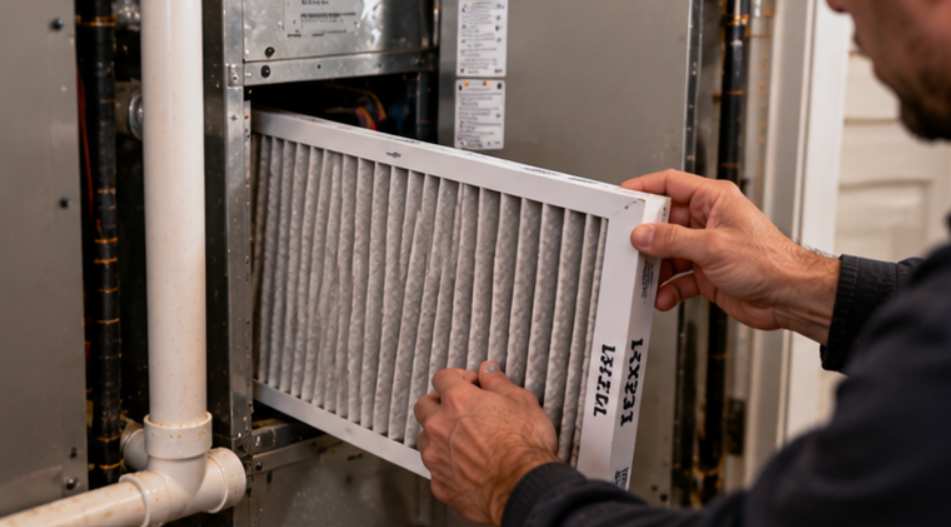
- Replace the filter: Swap a dirty filter, since a clogged one chokes heat delivery.
- Check the thermostat: Confirm it is set to heat and watch whether the aux indicator stays on.
- Listen during operation: Learn the normal defrost whoosh so an odd noise stands out.
Anything beyond that, the sealed refrigerant circuit, the reversing valve, the defrost control, belongs to a trained technician. Booking a fall service with a heating contractor in Prescott Valley before the first freeze can help catch developing problems before they become winter breakdowns. Do it while the weather still gives you room to schedule it.
Why Choose Environment Concepts Inc for Heat Pump Service in Prescott Valley?
Before Prescott Valley’s winter temperatures arrive, a professional heat pump tune-up can help identify issues with the defrost cycle, reversing valve, and auxiliary heating system. Environment Concepts Inc serves Prescott Valley homeowners who want to prepare their heat pumps for seasonal temperature changes and address potential problems before they interrupt indoor comfort.
If your system struggles to maintain the desired temperature, develops persistent ice buildup, or cycles more frequently than usual, professional heat pump repair in Prescott Valley can help identify the cause and determine the appropriate solution. If your heat pump is aging, requires repeated repairs, or no longer meets your home’s heating and cooling needs, exploring heat pump installation and replacement may be a practical next step.
Don’t wait for the coldest night to discover a heating problem. Contact Environment Concepts Inc at (928) 775-7900 or request an estimate to discuss your heat pump’s condition and prepare your system for the coming winter.
Frequently Asked Questions
How Often Should a Heat Pump Be Serviced in Prescott Valley?
At minimum, schedule professional heat pump maintenance annually. For a heat pump that heats and cools year-round, spring and fall service is commonly recommended. A pre-winter tune-up helps identify defrost problems, airflow restrictions, electrical issues, and backup heating concerns before colder nights arrive.
Why Does My Heat Pump Blow Cold Air During Defrost?
During defrost, your heat pump temporarily reverses refrigerant flow to warm the outdoor coil and melt accumulated frost. You may notice cooler air from the vents, a whooshing sound, or steam outside. These signs are usually normal if heating resumes shortly afterward. Persistent cool air warrants a professional inspection.
Why Is My Heat Pump Covered in Ice During Winter?
A light layer of frost can develop naturally when outdoor temperatures are low. However, thick ice that remains on the coil or obstructs the fan may indicate a faulty defrost control, sensor issue, restricted airflow, or drainage problem. Turn the system off if heavy icing persists and arrange professional service.
What Does Auxiliary Heat Mean on My Thermostat?
Auxiliary heat typically means your heat pump is using supplemental heating to help maintain the indoor temperature. It may activate during colder weather or when the home needs additional warmth. If it runs frequently in mild conditions or your electricity bills rise unexpectedly, have a technician check the system’s performance.
What Should a Heat Pump Tune-Up Include Before Winter?
A pre-winter tune-up should include inspecting electrical connections, checking airflow and filters, evaluating refrigerant performance, testing the defrost cycle, and verifying backup heat operation. The technician should also inspect the outdoor unit for damage or obstructions. These checks help identify developing issues before winter places greater demands on your system.


